
Becoming a Digital Storyteller: Voice, Place, Purpose, and Reflection

Personal Narrative
My Personal Narrative Digital Story was one of the first projects that helped me think deeply about voice, emotion, and pacing. In that story, I reflected on my experience going to Los Angeles for a runway show. At first, the story seemed like it would simply be about traveling and modeling, but through revision, it became more about confidence, doubt, and transformation. I wanted the audience to feel the nerves, humor, and excitement of that experience. One of the ideas I kept returning to was that the story was not only about stepping onto a runway, but about stepping into a more confident version of myself. That is why the title, “Stepping Into Her,” became so meaningful to me. It captured the emotional center of the story.
Through this project, I learned the importance of the seven elements of digital storytelling, especially point of view, emotional content, the gift of voice, soundtrack, economy, and pacing. My point of view mattered because the story was personal. The narration helped bring my personality into the project, especially when I used humor and reflection to describe my nerves backstage. I also learned that pacing matters because too many details can slow the story down, but the right details can make the audience feel closer to the moment. Adding actual runway footage helped strengthen the story because it gave visual proof of the transformation I was describing.
“The kind of confidence you borrow before you actually believe it.“
Sense of Place
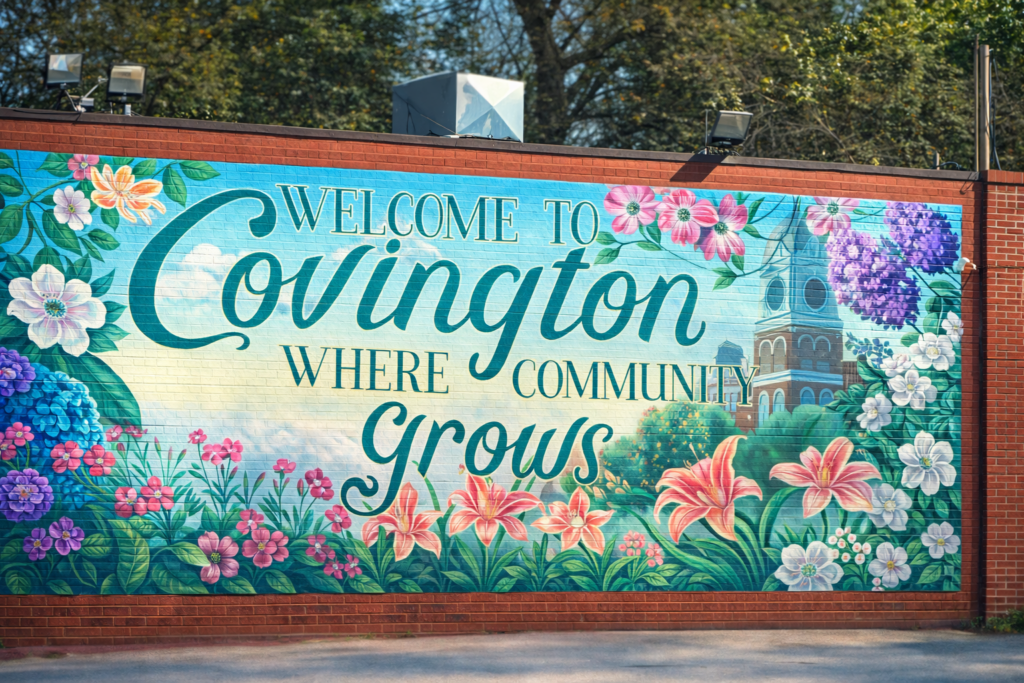
My Sense of Place Project helped me see digital storytelling in a different way. Instead of telling one personal story, I created an interactive feature about Covington Square. This project taught me that a place can hold many stories at once depending on who is experiencing it. I organized the project through different audience paths, including The Local, The Visitor, and The Fan. That structure helped me think about audience more intentionally. A local person might care about community and daily life, while a visitor might care about history, restaurants, and shopping. A fan might be excited about filming locations and popular culture. This project taught me that digital storytelling can be immersive and nonlinear. The audience does not always have to move through a story from beginning to end. They can explore through maps, images, videos, links, and interactive sections.
Curation and selection became very important in the Sense of Place project. I had to decide which images, locations, facts, and links best represented Covington Square. I learned that not every interesting detail belongs in the final project. A digital storyteller has to choose details that support the main experience. This helped me better understand economy, one of the seven elements of digital storytelling. Economy does not mean the story has to be short or simple. It means every part of the story should have a purpose.
Community Engagement Passion Project