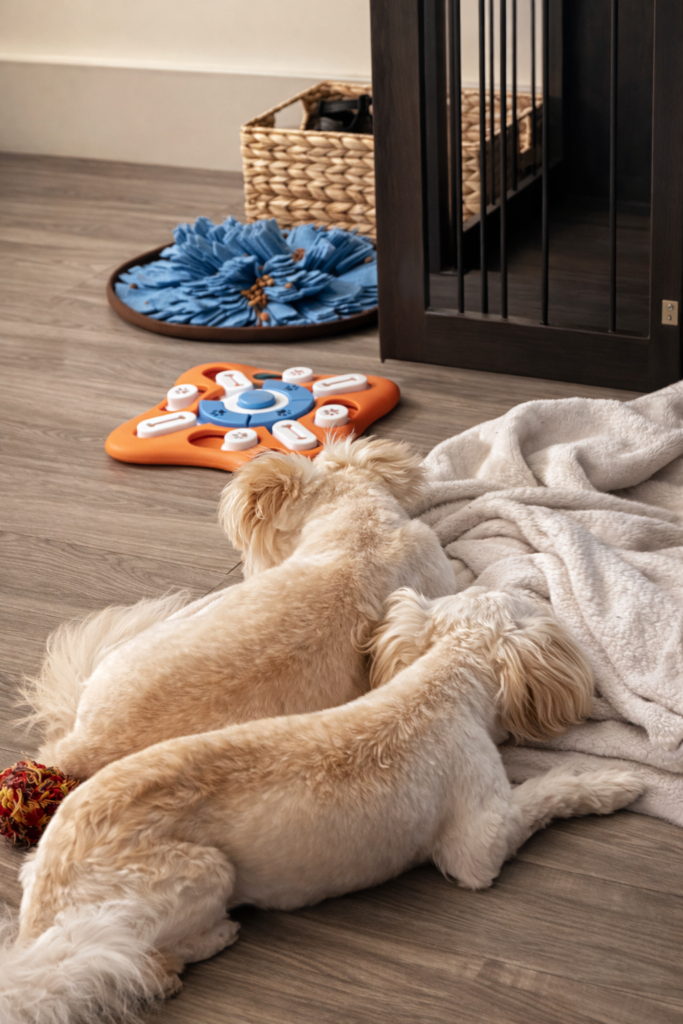
Double Trouble at Rest.
This image uses leading lines from the floorboards and crate bars to guide the viewer’s eye toward the dogs. The toys create foreground interest, adding context to their playful energy even while they rest. The composition balances stillness and activity, showing contrast between calm bodies and scattered enrichment toys.
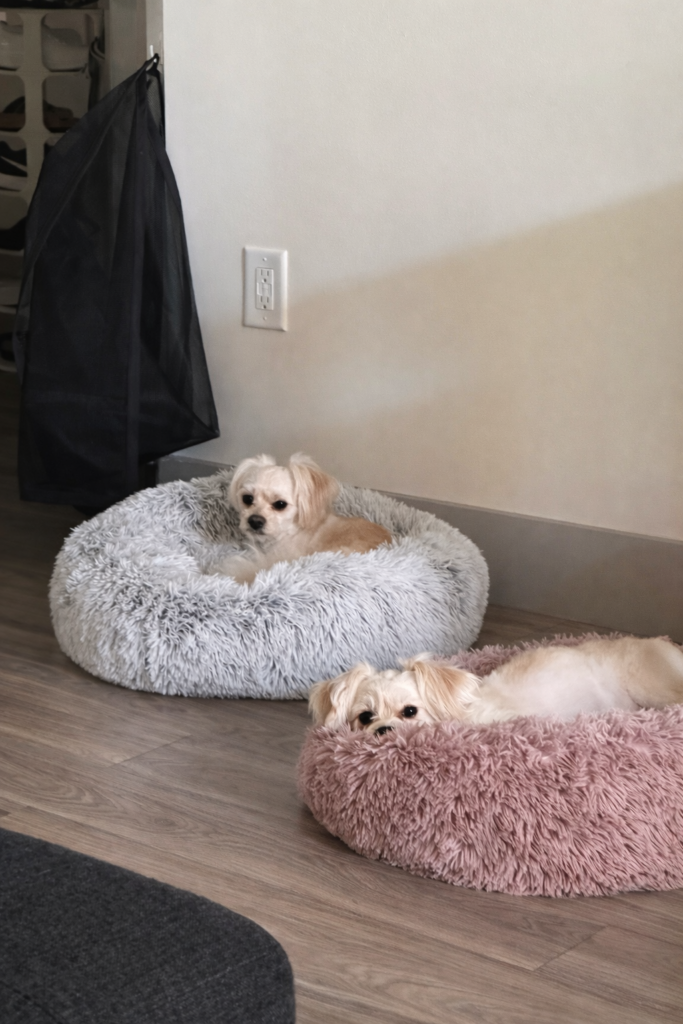
Same House, Different Personalities.
This composition uses color contrast between the gray and blush beds to differentiate personalities while maintaining harmony. The negative wall space above them emphasizes scale and placement. The dogs are positioned using the rule of thirds, giving visual breathing room and balance.
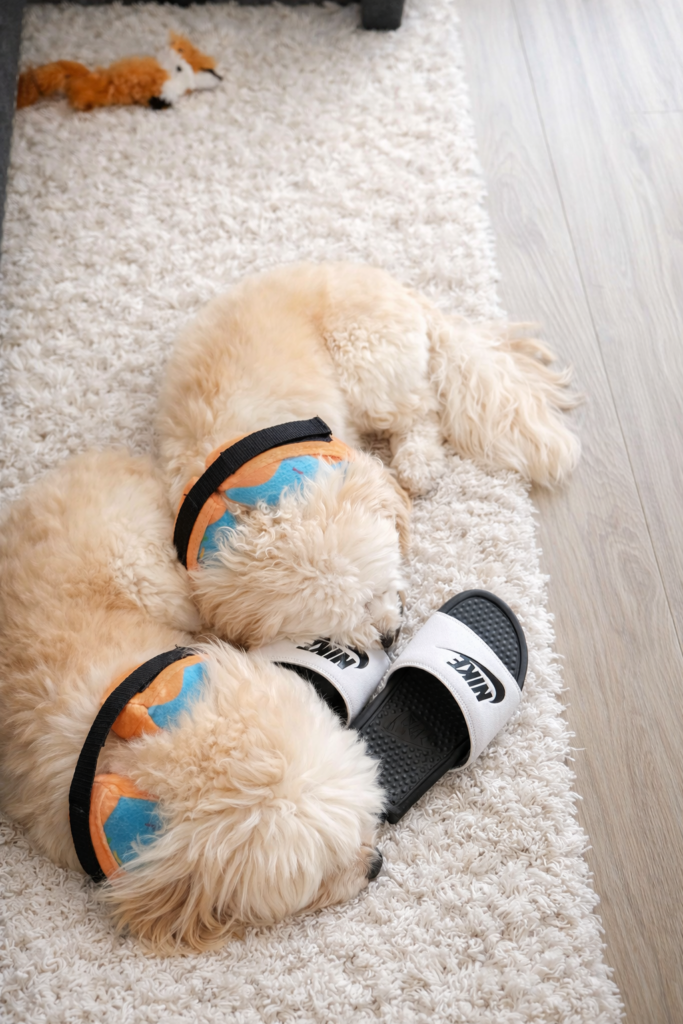
Post-Zoomie Shutdown.
This photo uses top-down perspective to create intimacy and storytelling. The bright sandals act as a visual anchor, contrasting with the soft neutral carpet. The diagonal placement of their bodies adds dynamic balance, while their mirrored positioning creates subtle symmetry.
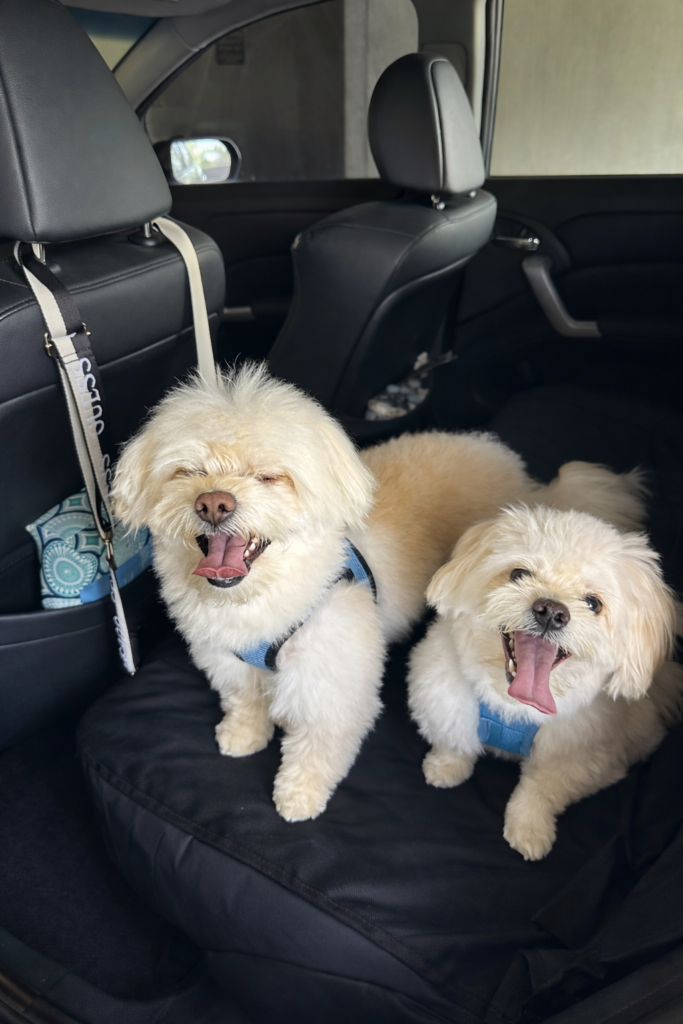
Backseat Legends.
This image uses framing through the car interior to contain the subjects and draw focus to their expressions. Their open mouths and matching harness colors create visual repetition and symmetry, reinforcing the “double” theme. The shallow depth of field keeps the background minimal so emotion becomes the focal point.
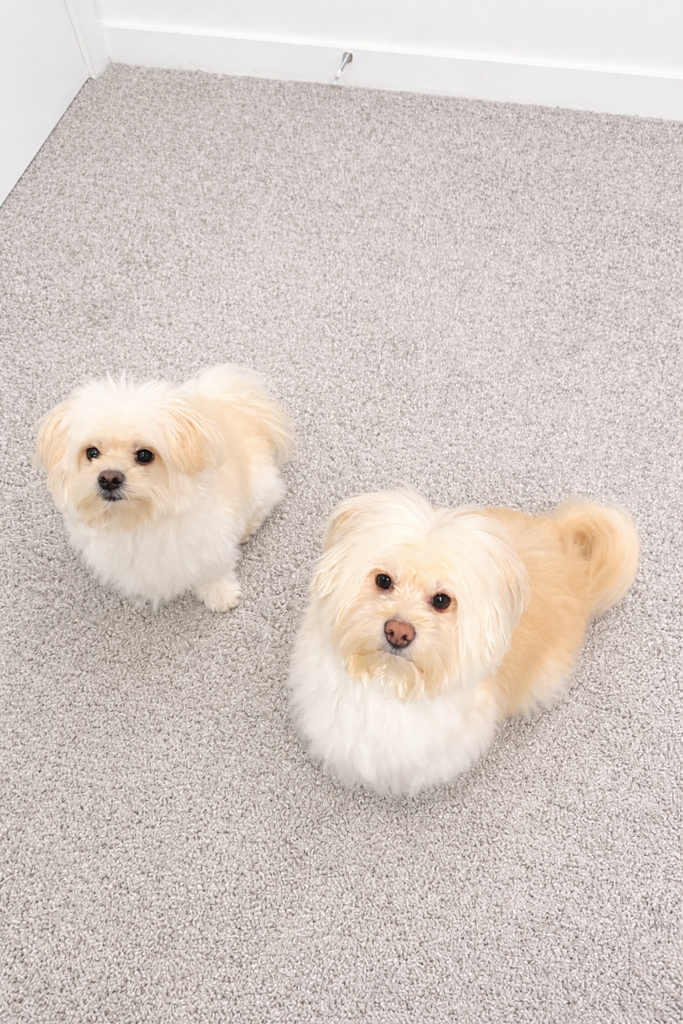
We Heard the Treat Bag.
This image uses eye-level engagement and direct gaze to create connection with the viewer. The neutral carpet acts as negative space, allowing their faces to become the central focus. Their triangular placement forms a strong compositional shape, guiding the eye between them.
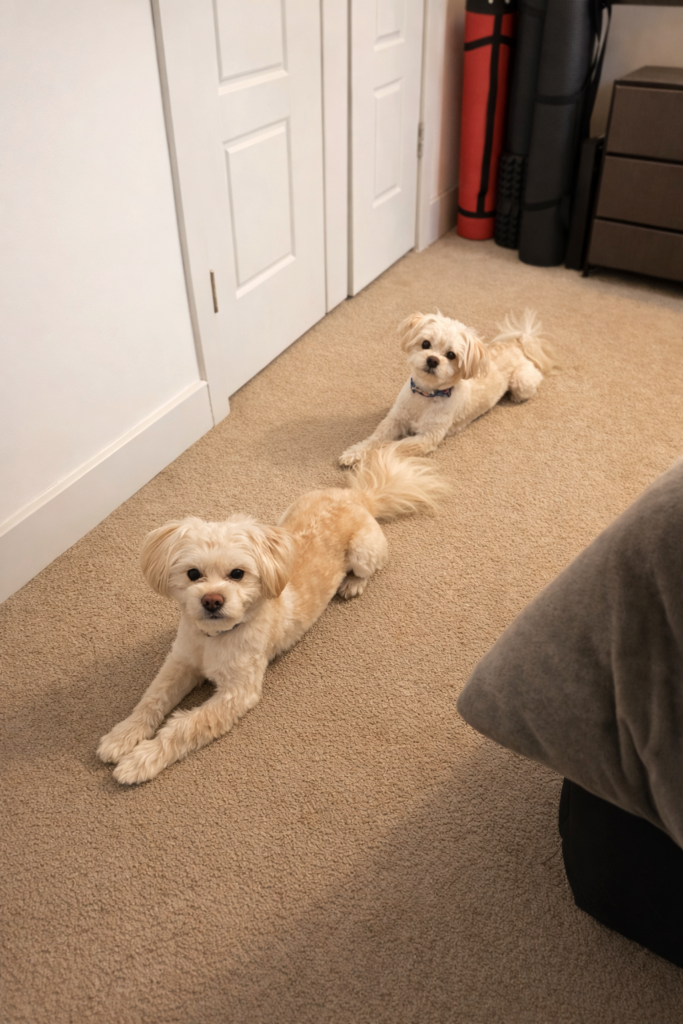
Tactical Waiting.
This photo uses depth and perspective, with one dog positioned slightly forward and the other behind to create spatial layering. The hallway lines subtly act as leading lines, drawing attention toward the subjects. The repetition of posture reinforces visual unity.