
The Courthouse That Became a Star: Covington’s Most Iconic Landmark On and Off Screen
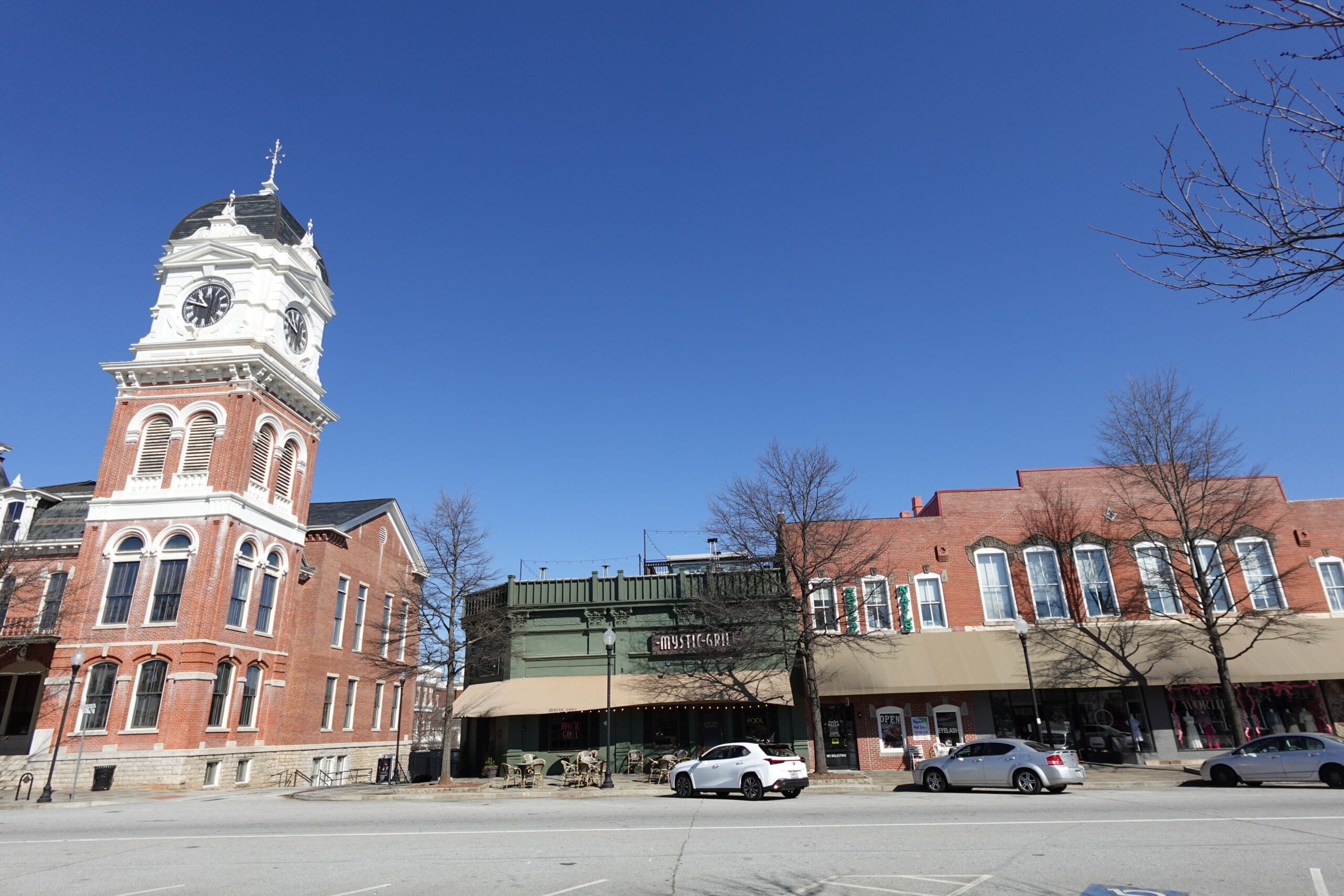
At the center of Covington Square are the places that anchor everyday life in the community. The Newton County Courthouse stands proudly in the middle of the square, serving as both a historic landmark and a symbol of the town’s civic life.
Not Just any Courthouse
At the center of Covington Square stands more than just a building. The courthouse is a presence. It rises with quiet authority, anchoring the town both physically and culturally, its clock tower watching over streets that have carried generations of stories. While many courthouses serve as symbols of governance, Covington’s courthouse has evolved into something far more layered. It is a witness to history, a centerpiece of community life, and, perhaps most unexpectedly, a recurring star in film and television.
The courthouse dates back to the early nineteenth century, reflecting the era when town squares were designed to bring people together. Like many Southern courthouse towns, it was intentionally placed at the heart of Covington, surrounded by businesses, gathering spaces, and everyday activity. Over time, the building has seen change in every form. Economic shifts, cultural transformations, and modernization have all left their mark. Yet through it all, the courthouse has remained remarkably consistent in its presence, offering a sense of continuity in a town that has continued to grow and evolve around it.
What makes this courthouse especially compelling is not just its longevity, but its adaptability. Its architecture carries a timeless quality that allows it to seamlessly represent different eras. The symmetry of the structure, the classic brickwork, and the prominence of its clock tower create a visual identity that feels both specific and universal. It is distinctly Covington, yet it has the ability to stand in for countless places, which is exactly what has made it so valuable to the film industry.
For decades, filmmakers have been drawn to Covington Square, and the courthouse has often taken center stage. Its appearance has helped bring fictional towns to life, transforming it into settings that feel both nostalgic and cinematic. In one moment, it can represent a small town steeped in tradition. In another, it becomes the backdrop for drama, conflict, or romance. This flexibility has allowed the courthouse to transcend its original purpose, stepping into roles that reach audiences far beyond Covington.
The courthouse has quietly built an impressive filmography of its own. In The Vampire Diaries, it anchors the fictional town of Mystic Falls, appearing in establishing shots and community scenes that define the series’ identity. Its presence helps ground the supernatural elements of the show in a space that feels real and familiar. In In the Heat of the Night, the courthouse contributes to the portrayal of Sparta, Mississippi, reinforcing themes of justice and social tension central to the series. Films like Sweet Home Alabama and The Dukes of Hazzard use the square and courthouse surroundings to establish a classic Southern town atmosphere, filled with charm and character.
Even in productions where it is not the central focus, the courthouse plays a supporting role in shaping the story’s environment. In Remember the Titans, Covington’s architecture, including areas surrounding the square, helps recreate a 1970s Virginia town, grounding the film’s emotional and historical narrative. In Selma, Lord, Selma, the courthouse contributes to the visual storytelling of the civil rights era, adding depth and authenticity to the setting. Additional productions such as The Originals, Legacies, and The Fighting Temptations further demonstrate how Covington continues to serve as a versatile backdrop for both television and film.
What is remarkable is how seamlessly the courthouse exists in both realities. On one hand, it continues to serve its original purpose, functioning as a center of civic life. On the other, it lives on in scenes captured and replayed across screens, becoming part of stories that resonate with audiences around the world. This dual identity gives the courthouse a rare kind of significance. It is not just preserved for history. It is actively participating in new narratives.
Standing in front of the courthouse today, it is easy to feel that overlap. The structure carries the weight of time, yet it also feels current, alive with activity and meaning. Visitors may recognize it from a favorite show, while locals pass by it as part of their daily routine. In that shared space, the lines between past and present, reality and fiction, begin to blur.
The Covington courthouse is more than a landmark. It is a storyteller. Through its architecture, its role in the community, and its growing legacy on screen, it continues to shape how Covington is seen, experienced, and remembered. Long after the cameras stop rolling and the scenes fade to black, the courthouse remains—steady, enduring, and always ready for its next role.